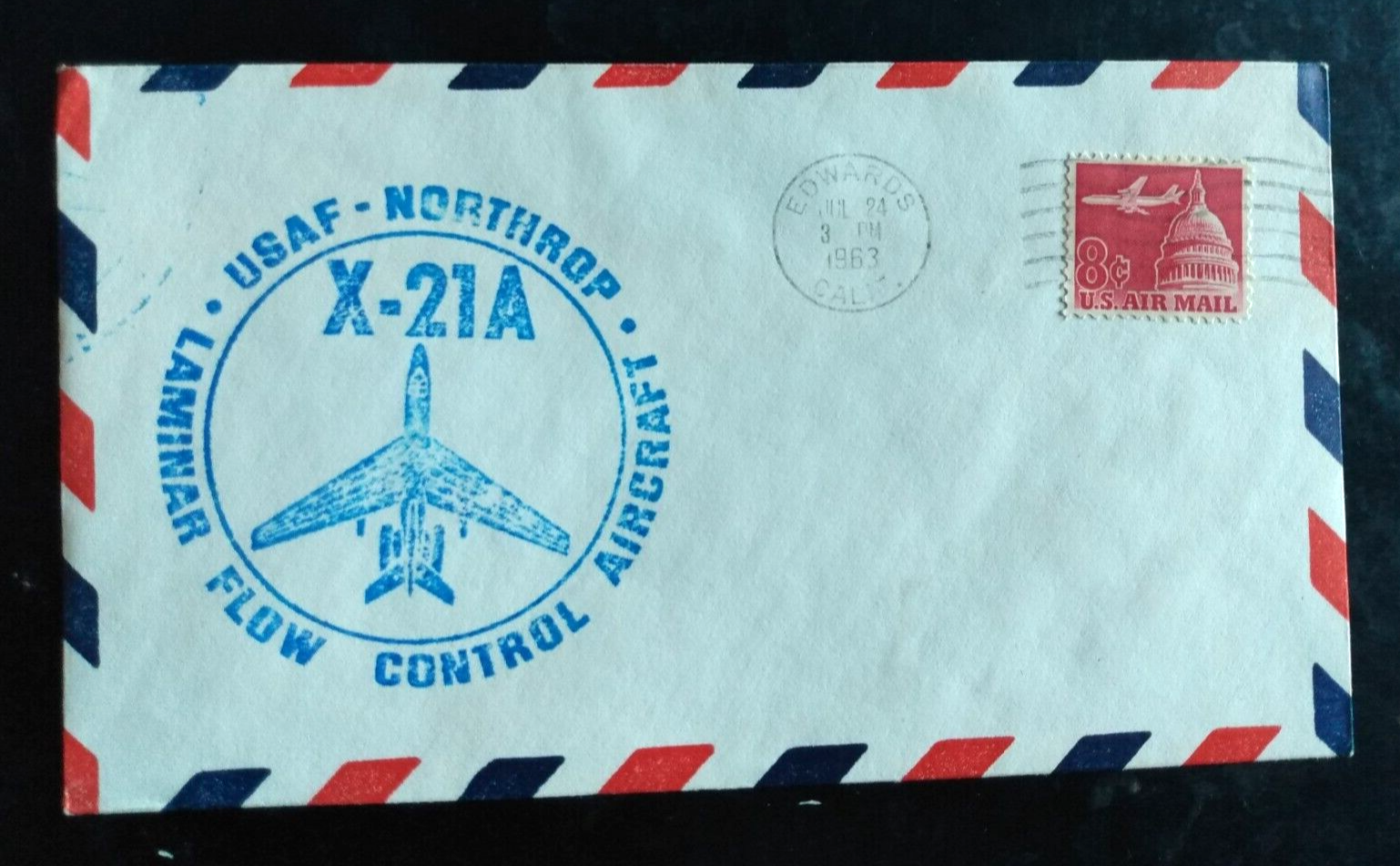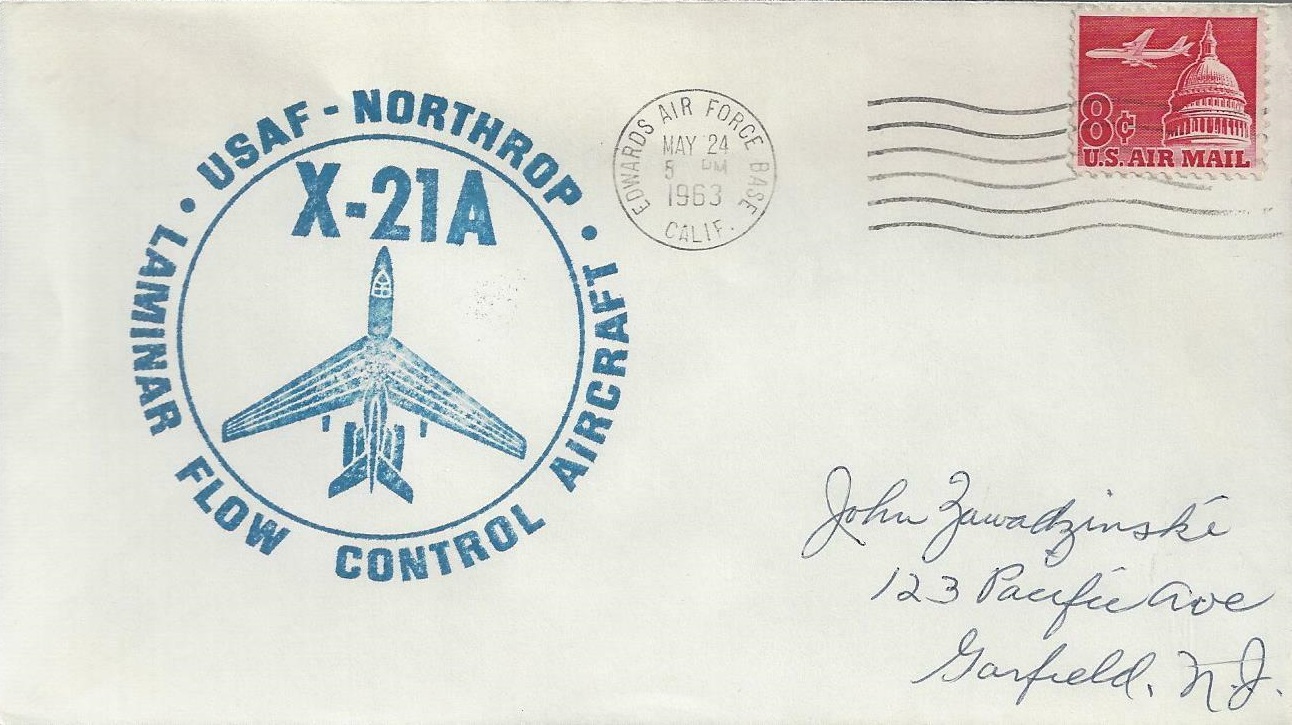
The X-21A was designed to explore the feasibility of utilizing full-scale boundary layer control on a large aircraft.
Paper and wind tunnel studies conducted by Northrop had indicated boundary layer control would offer numerous
performance benefits. After successfully demonstrating the ability to achieve laminar flow over approximately 75
percent of the wing surface, the X-21As were used to explore the impact of rain, sleet, snow, and other weather
anomalies on the system.
During the flight test program, the X-21As demonstrated that the boundary layer control technique, called laminar
flow control, was both effective and viable. However, they also showed that these benefits came at a significant
maintenance penalty—the numerous small slots required for the airflow constantly plugged up.
The two X-21As were originally built as Douglas WB-66D light bomber derivatives that had been retired from active
service. Both X-21As survived the flight test program and are currently in a bad state of repair on the photo range
at Edwards AFB.