When the Atlas ICBM was being developed, Convair proposed constructing two incremental test vehicles to assist in verifying the
enormous technological developments necessary to complete the program. At this point Atlas was envisioned as an enormous 160-foot high,
12-foot diameter missile weighing 440,000 pounds and powered by four booster engines and a single sustainer engine.
The first of these test vehicles was the X-11. Using an incremental flight test program, the X-11 wouldtest the overall airframe using
only the single sustainer engine while the subsequent X-12 would integrate more components including the four booster engines.
In the meantime, the national laboratories made breakthrough discoveries that allowed the nuclear payload for the Atlas to be drastically
reduced in size. Based on the new estimates, Convair significantly reduced the size and weight of the Atlas ICBM, allowing the use of only
three engines (two boosters and one sustainer) instead of the original five. The X-11 fell by the wayside.
Still, Convair wanted to proceed with an incremental test program, but this time the resultant vehicle was called the Atlas Series A
(later shortened to simply Atlas A) instead of X-11. The test missile would be powered by the two booster engines; the sustainer would
be added on the later Atlas B.
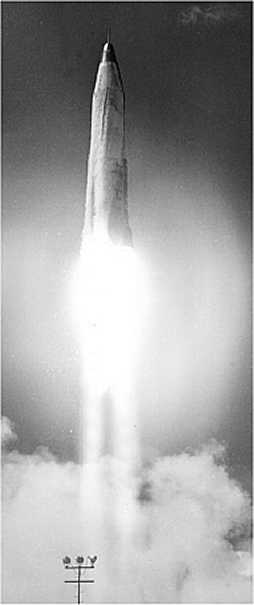
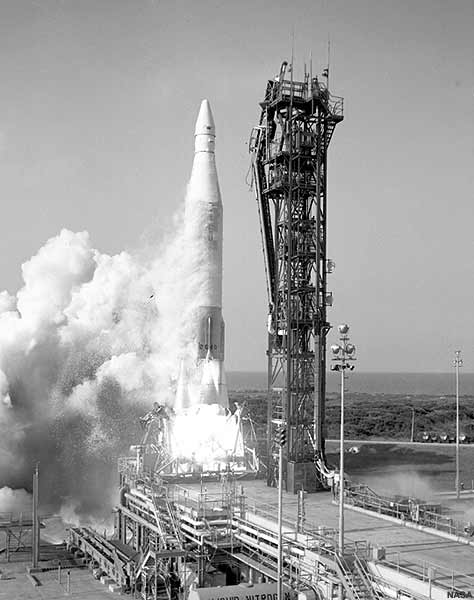
In the end, 16 Atlas As were built and 8 were launched from Cape Canaveral. They successfully demonstrated the pressure-stabilized
propellant tanks and propulsion system compoynents destined to equip the Atlas ICBM—which later became one of the premier space
launch vehicles.