|
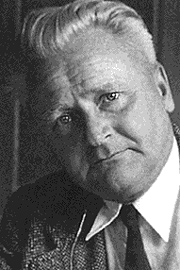
As an assistant at the Technical University in Vienna, from 1930 to 1935, he continued his systematic mathematical investigations into rocket engines. In contrast to Oberth and others, Sänger was convinced that the best means to reach space was through a combination of rocket and aircraft technology. As a result, he closely examined the idea of a rocket plane, made engine calculations, and carried out investigations into the most suitable propellants, finally setting up a test laboratory in which he conducted experiments on forced-circulation-cooled liquid propellant rocket engines. The results of his work appeared in The Technology of Rocket Flight—the first scientific study of space planes.
From 1936 on, Sänger was engaged by various German aeronautics research institutes. Among other things, he constructed ramjet engines, which he tested on a Dornier 217 in April 1942. At the same time, his ideas on hypersonic aircraft were beginning to take shape. After the War, Sänger's work served as the basis for the development of the X-15 and, ultimately, the Space Shuttle. From 1946 to 1954, Sänger acted as a consultant engineer in France, where he mainly worked on development problems connected with rocket and large ramjet engines. In 1954, he returned to Germany, where he took up a post at Stuttgart Technical University. Subsequently, he acted as consultant to a number of German aerospace companies, assisting for example the Junkers Works from 1961 to 1964 in their studies related to Proposals for the Development of a European Spacecraft. Work by Sänger also laid the foundations for the Sänger Project, which was put forward by MBB. This was a concept for a two-stage, reusable aerospace plane for the purpose of inexpensively transporting crews and payloads into space. In the 1950s, he even suggested a design for a photon rocket, propelled by gamma rays produced by the annihilation of electrons with positrons.