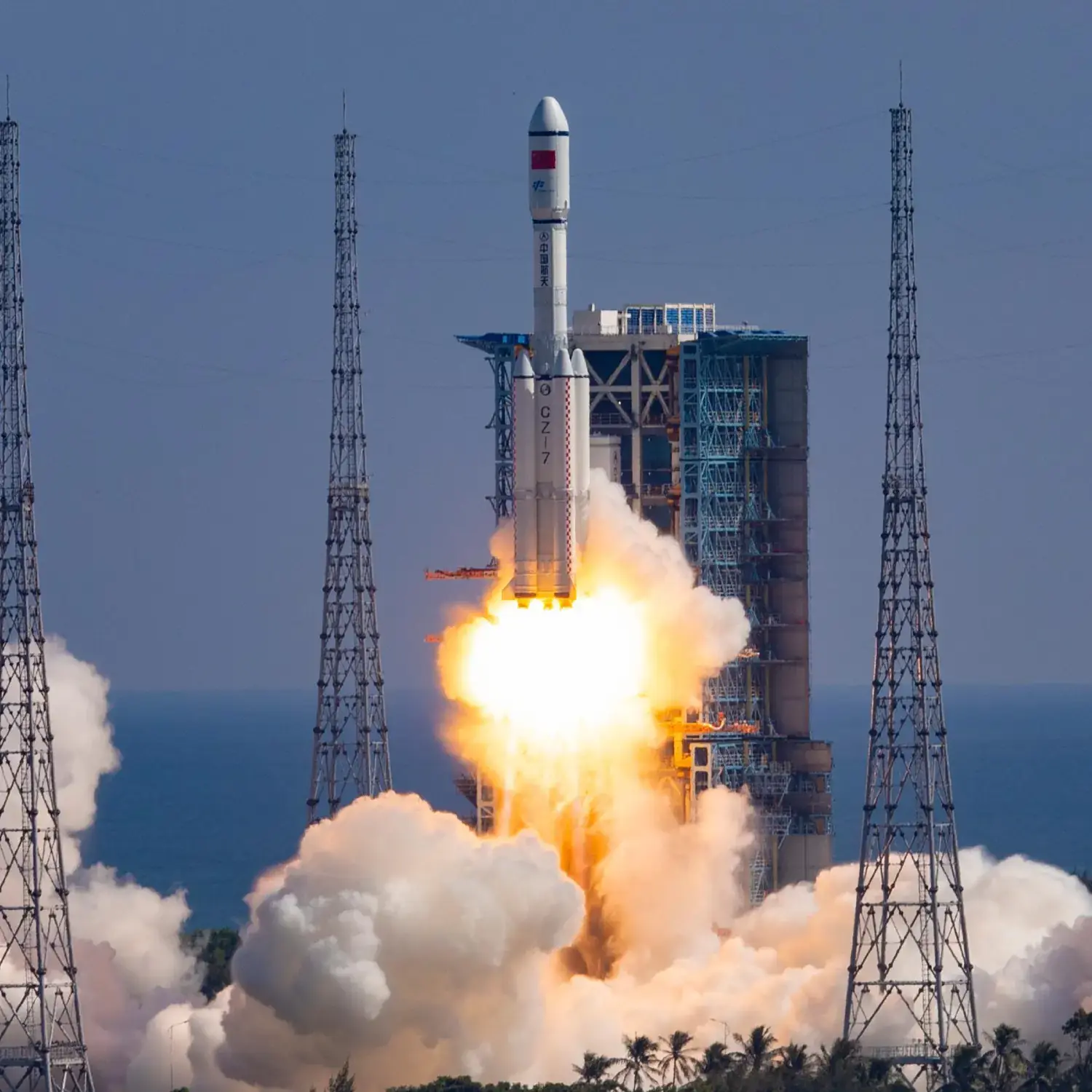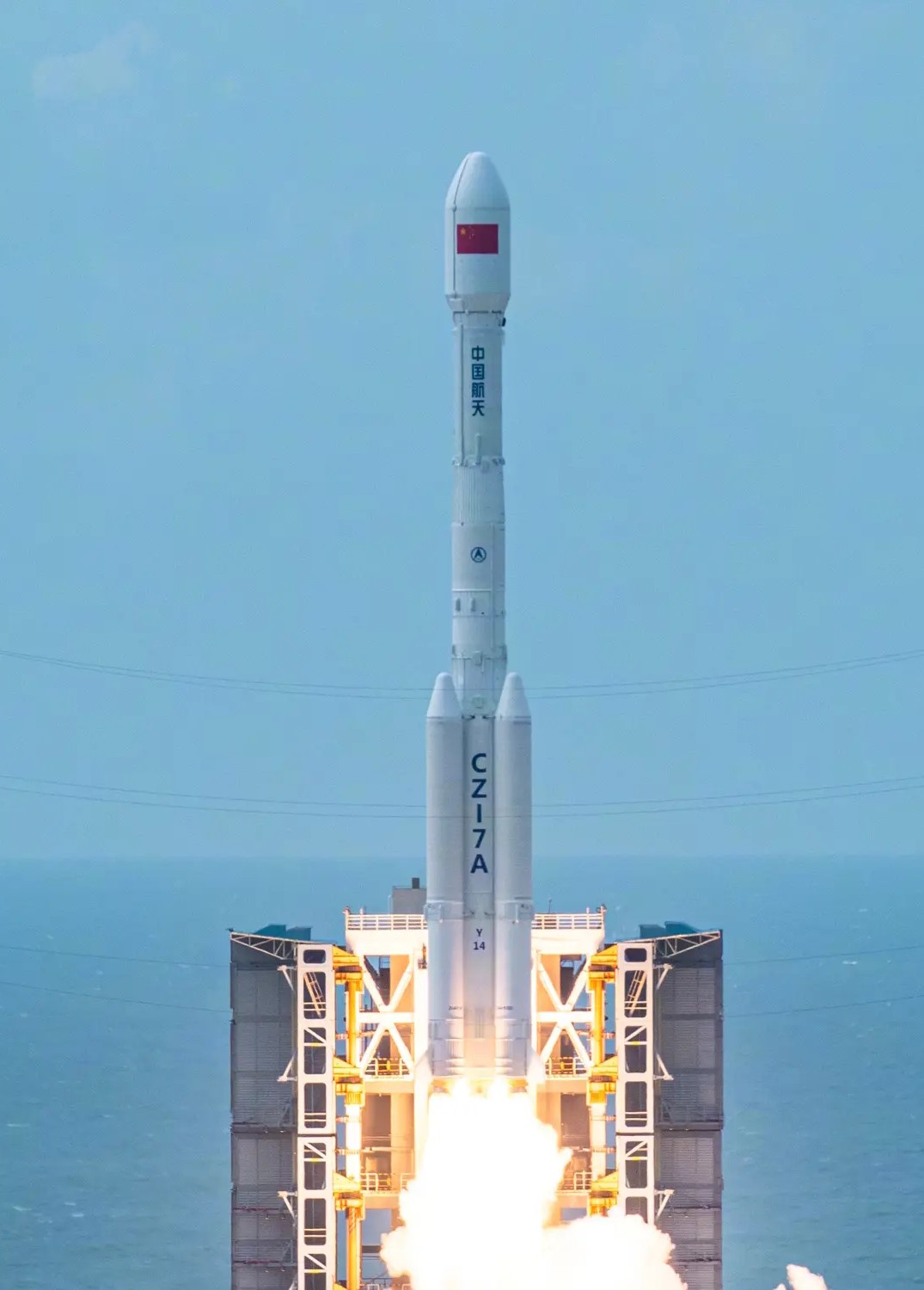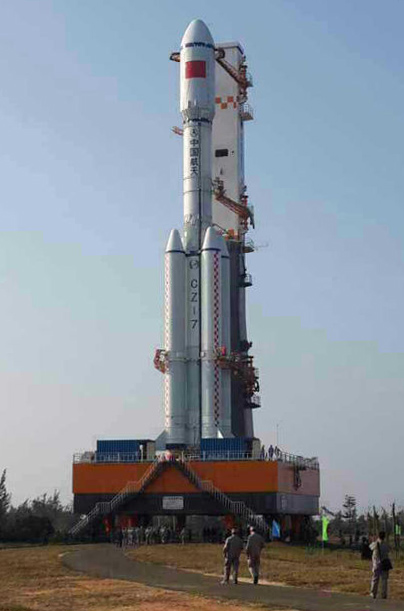
- The CZ-7 is China’s new-generation medium-lift orbital launcher developed by China Academy of Launch Vehicle Technology (CALT). The development of the launch vehicle began in May 2010. The first flight of the launcher is scheduled for April 2016 from the newly built Hainan Space Launch Centre. The CZ-7 will initially be used for the launch of the Tianzhou cargo resupply vehicle, but will eventually succeed all CZ-2, -3 and -4 families of launch vehicles currently in use.
- The CZ-7 was originally developed as the CZ-2F/H, a modernised version of the CZ-2F, for both unmanned and manned flight missions in the China Manned Space Programme. The project later evolved into a new medium-lift launch vehicle incorporated with the technologies developed for the new-generation heavy-lift launcher to fit the payload capacity gap between the small-load CZ-6 and the heavy-lift CZ-5.
- It is estimated that over the next two decades 80% of future Chinese orbital launch requirements will be medium-weight payloads, i.e. heavy telecommunications and Earth-observation satellites, and regular manned spacecraft and cargo vehicle trips to the space station. Existing Chinese space launchers are mostly in the lower-end of this class, offering limited payload capacity and also burning highly toxic and environmentally damaging N2O4/UDMH propellant. There is a requirement for a new-generation medium-lift space launcher system that offers safety, reliability, flexibility, and economy.