The objective of the Big Joe program was to test the Mercury spacecraft ablating heat shield. It was also the
first Project Mercury flight using an Atlas booster. The nose-cone capsule for Big Joe had
no retrorocket package. The inner structure held only a half-sized
instrumented pressure vessel instead of a pressurized cabin contoured
to the outer configuration. Built in two segments, the lower half by
Lewis and the upper by Langley, the main body of the
spacecraft replica was fabricated with thin sheets of corrugated
Inconel alloy in monocoque construction. This model of the Mercury
capsule had more than one hundred thermocouples around the capsule
skin to register temperatures inside and under the heatshield, sides
and afterbody. (Reference NASA SP-4201 p. 201)
The Atlas 10-D was programmed to rise, pitch over horizontally to
the Atlantic before it reached its 100-mile peak altitude, then pitch
down slightly before releasing its corrugated nose cone at a shallow
angle barely below the horizontal.
Mission details:
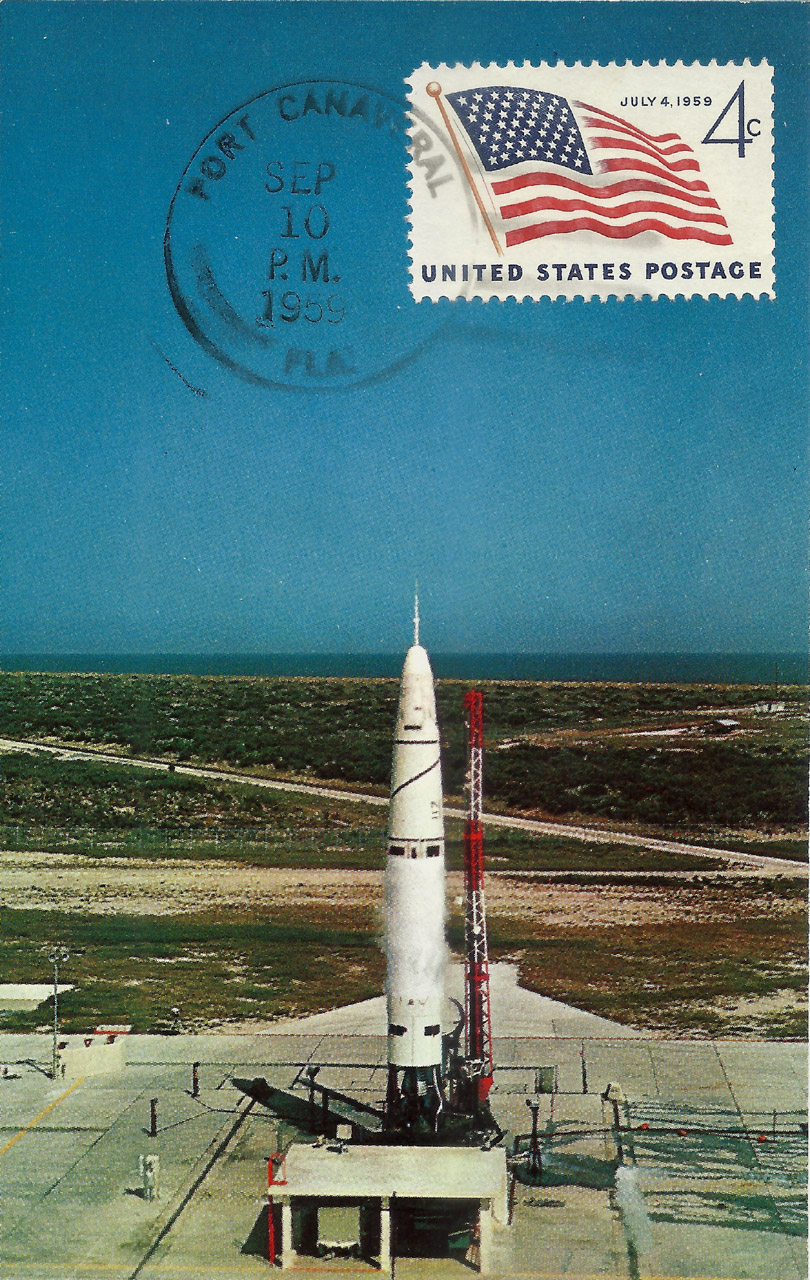
The original launch date for Big Joe was July 4, 1959 but the
launch date was postponed until min-August by the Air Force because
the booster did not checkout out perfectly at first. Then it was put
off until early September by Space Task Group (STG) engineers, who
were working on instrumentation and telemetry problems. Finally, the
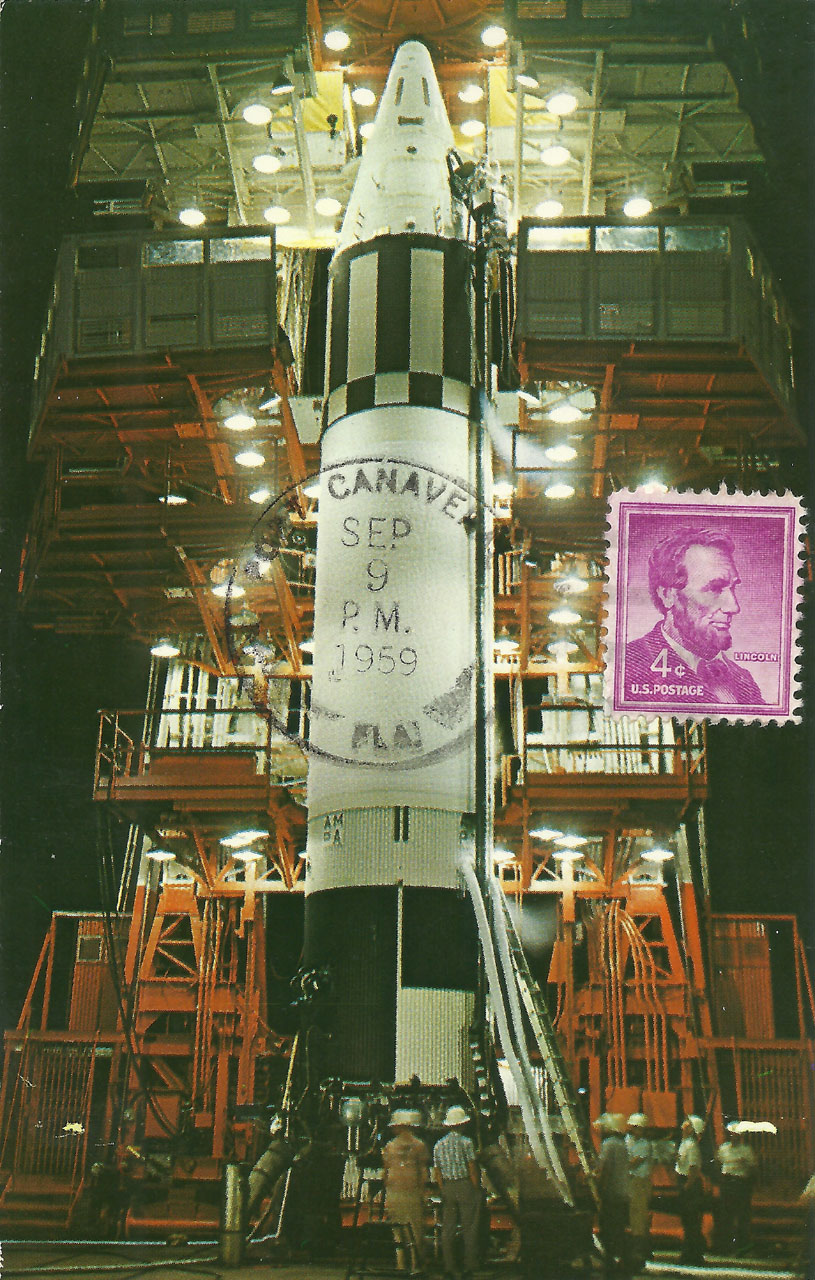
count picked up on 9/8/59 when Atlas 10-D (the sixth of this model to
be flight tested) stood on the launch pad with a Mercury capsule
(minus its escape tower).
About 2:30am a 19-minute hold in the countdown was called to
investigate a peculiar indication from the Burroughs computer that was
to guide the launch. A malfunction was found in the Azusa impact
prediction beacon, a transponder in the booster. Since there were
several redundant means for predicting the impact point, the trouble
was ignored and the countdown resumed. Liftoff occured at 3:19am. EST.
The Mercury capsule flew a 1,424 mile (2,292 km) ballistic flight to the altitude of 90 miles (140 km).
About 7 hours after launch, the destroyer Strong reported that she had netted the boilerplate capsule intact.
The capsule landed 490 n.m. short of the planned landing point and about midway between two destroyers. Two P2V′s received SARAH beacon indications and
homed in on the capsule, sighting it at 3 hours and 31 minutes after lift off. They maintained surveillance of the capsule until the arrival of USS Strong DD 758, a
Desflot Four destroyer, which recovered the capsule 7 hours and 54 minutes after lift off.
The capsule was studied for the effect of re-entry heat and other flight stresses from its 13-minute flight.
Since the data from Big Joe 1 satisfied NASA requirements, a second launch, Big Joe 2 (Atlas 20D), which had been
scheduled for the fall of 1959, was canceled and the launch vehicle was transferred to another program.
Mission Highlights:
The flight was both a success and failure, the heat shield survived reentry and was in remarkably good
condition when retrieved from the Atlantic Ocean.
The Atlas-D booster, however, failed to stage and separated too late from the Mercury capsule.
The added weight of the booster engines retarded velocity by 3000 ft per second and the capsule
separated from the booster 138 seconds too late. The impact point was 500 miles short. The boilerplate capsule was
not equipped with a launch escape system.
The Mercury spacecraft used in the Big Joe 1 mission is displayed at the National Air and Space Museum's Steven F.
Udvar-Hazy Center in Chantilly, Virginia.
Astrophilately covers:
Launch cancel Port Canaveral.
Mercury capsule returned to Port Canaveral, September 10, 1959. Credit: #403